

What is Malleable Iron? What is "Magang" ?
To understand 'wrought iron' and 'malleable cast iron',The key is to first clarify the conceptual relationship between the two.
The two correspond to 'common name' and 'scientific name',Not two different materials.
Next, we will analyze them in detail from aspects such as definition, characteristics, processing principles, and application scenarios, to understand them.
1.What is malleable iron? What is "Magang"?
"Magang" is another name for malleable iron, its English name is malleable cast iron,It is named for its performance being close to that of steel.
is a type of cast iron that has been annealed, offering high strength, plasticity, and toughness.
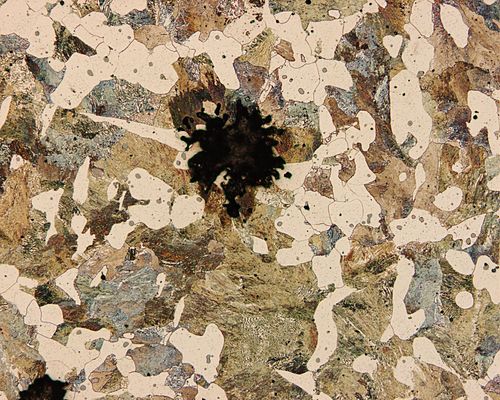
Its main components include iron, carbon, and silicon. After annealing, the cementite decomposes into flocculent graphite, thereby improving its mechanical properties.
Its production logic is 'cast first, modify later':
1.First, pour the molten iron (containing elements like carbon and silicon) into molds to create "white cast iron parts" (hard and brittle, cannot be used directly).
2.Perform long-term annealing heat treatment on 'white cast iron parts' (usually maintained at 800-900°C for several tens of hours) to decompose the internally hard and brittle 'cementite' into a more ductile 'ferrite + graphite' (the graphite is distributed in a flocculent form, rather than as the lamellar form found in ordinary cast iron).
3.Finally obtained: malleable cast iron ( "Magang" ) with high toughness, impact resistance, and easy machinability
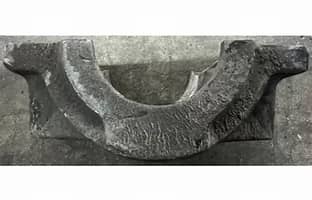
2.The History of Malleable Cast Iron (Magang)
Humans began using malleable iron as early as the 4th century BC. Archaeological discoveries have unearthed malleable iron products in China
produced between the 4th century BC and the 9th century AD.
The Tang Dynasty period in Chinese history, the use of malleable iron had begun to decline, but malleable iron products made in the 9th century were still found.
A patent from England in the 1670s mentioned malleable iron.
French scientist René-Antoine Ferchault de Réaumur conducted many studies on malleable iron in 1720.
He discovered that cast iron, which was originally hard and unworkable, could be softened to a workable state if placed in iron ore or hammer slag
and exposed to high temperatures for several days.
The production of malleable iron in the United States was started by Seth Boyden, who opened a foundry in 1826 to make harness hardware and other small castings.
3.Its common application scenarios
Precisely because of the "low cost + high toughness" characteristics, ductile iron is widely used in areas that require toughness but have limited budgets.
Typical scenarios include:
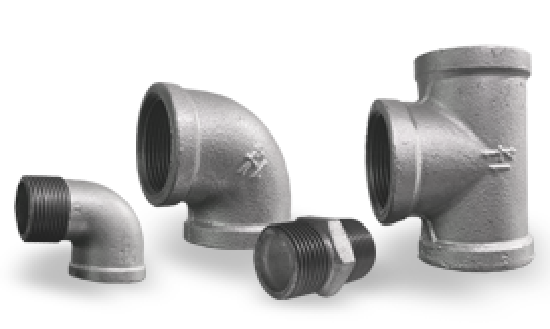
1.Pipe fittings: the most common applications, such as malleable iron pipe fittings (elbows, tees, unions, etc.) for water and gas pipes, need to withstand certain pressure and avoid breaking during installation.
2.Mechanical components: such as the plowshare of agricultural machinery, the handle of a machine tool, and the differential housing of a car; they need to be impact-resistant and easy to machine.
3.Hardware tools: for example, the jaws of wrenches and pliers need a balance of hardness and toughness to prevent chipping during use.
4.Building accessories: such as scaffold fittings and door and window hinges, need to withstand repeated loads and be low-cost.
4.Which concepts is malleable cast iron (Magang) easily confused with?
Gray cast iron, ductile cast iron, and malleable cast iron are different types of cast iron, with their main differences lying in the form and properties of graphite.
1.Gray cast iron: The graphite in gray cast iron is in the form of flakes,This form of graphite gives gray cast iron lower strength and plasticity
but it has good casting performance and is easy to machine.Gray cast iron is often used to manufacture parts that do not require high strength
but need to withstand certain pressure, such as machine tool beds, bases, and housings.Generally speaking, gray cast iron requires carburizers
to meet its carbon content requirements, and its basic specifications require a relatively low sulfur content.
2.Ductile iron: The graphite in ductile iron is spherical,This form of graphite makes ductile iron much stronger than gray cast iron
while also providing certain plasticity and toughness.The mechanical properties of ductile iron are close to those of medium carbon steel
so it is often used to manufacture parts that are subject to complex forces and heavy loads, such as crankshafts, connecting rods, camshafts, and gears.
For ductile iron, nitrogen content is an important indicator. Excessive nitrogen content may lead to unevenness in castings, and may even cause porosity and cracks.
Regardless of the type of cast iron, the main function of the carbon additive is to provide a carbon source, so its carbon content is a key indicator.
Different manufacturers and applications may have different requirements for the fixed carbon content of carburizers
but it is generally required that the fixed carbon content be within a certain range.
In general, when the carbon content is low, it has higher plasticity and toughness, making it suitable for manufacturing parts that need to withstand impact and vibration.
When the carbon content is relatively high, it has higher hardness and wear resistance, making it suitable for manufacturing tools, knives, and molds.
Overall, gray cast iron, ductile iron, and malleable iron differ in graphite form, mechanical properties, and applications.
The choice of cast iron type should be based on the specific usage environment and performance requirements.
Summary
In simple terms: 'Malleable Cast Iron' is the common name for 'malleable cast iron'. It is not 'steel', but a type of cast iron improved through heat treatment.
By optimizing the manufacturing process, it addresses the brittleness issue of ordinary cast iron, making it a preferred material for low-cost and high-toughness applications.
The most widely known products are various malleable iron pipe fittings.
Reference materials
An Jiru. Handbook of Common Metal Materials in China and Abroad. Shaanxi Science and Technology Press.1998:
Brown, Robert R. Foseco Ferrous Foundryman's Handbook. Butterworth-Heinemann. 1999.
Donald B. Wagner. Iron and Steel in Ancient China. BRILL. 1993: 338.
Journal and Proceedings of the Hamilton Scientific Association. 1927.
Harvey E Steinhoff; Gordon B Mannweiler. Malleable Iron Castings. Malleable Founders Society. 1960.